
Warwick Council Is Moving To Data-Led Enforcement
Property Licensing Guide for Warwick
Warwick currently operates additional licensing in 17 wards; mandatory HMO licensing applies everywhere. Last checked: 20 October 2026.
This free guide will provide you with the key details regarding what licensing requirements are necessary in this area and how to apply for a licence.
Warwick is in the West Midlands registration window for the PRS database, which opens on 15 December 2026: see when landlords in the West Midlands have to register on the PRS database.
Warwick Property Licensing Schemes
Since 18 January 2024, any shared house in Warwick District with three or more people in two or more households needs a licence. That includes purpose-built student accommodation. Warwick District Council expected about 700 properties to need licensing.
Is manual compliance causing a headache for your agency? At Kamma, we specialise in automating licensing compliance for agents across the UK. If you need any assistance in getting your property portfolio compliant, find out how we can help letting agents here.
Not sure whether a Warwick property needs a licence? Kamma's free checker covers selective, additional and HMO schemes.
Check a Warwick property →What are the licensing requirements for Warwick?
Mandatory licensing in Warwick
Mandatory HMO licensing applies across Warwick (and all of England) to larger HMOs. These are properties occupied by five or more people forming more than one household, including:
- Shared houses and flats occupied by students and young professionals.
- Properties converted into bedsits with some shared facilities.
- Properties converted into a mix of self-contained and non-self-contained accommodation.
Do I need an additional property licence in Warwick?
Additional licensing requires smaller HMOs in a designated area to be licensed. That means a privately rented property with three or more people forming more than one household.
Warwick operates additional HMO licensing. The current designation is set out below.
Do I need a selective licence in Warwick?
Selective licensing requires almost all privately rented properties in a designated area to be licensed, regardless of the number of occupants.
Warwick does not currently operate a selective licensing scheme.
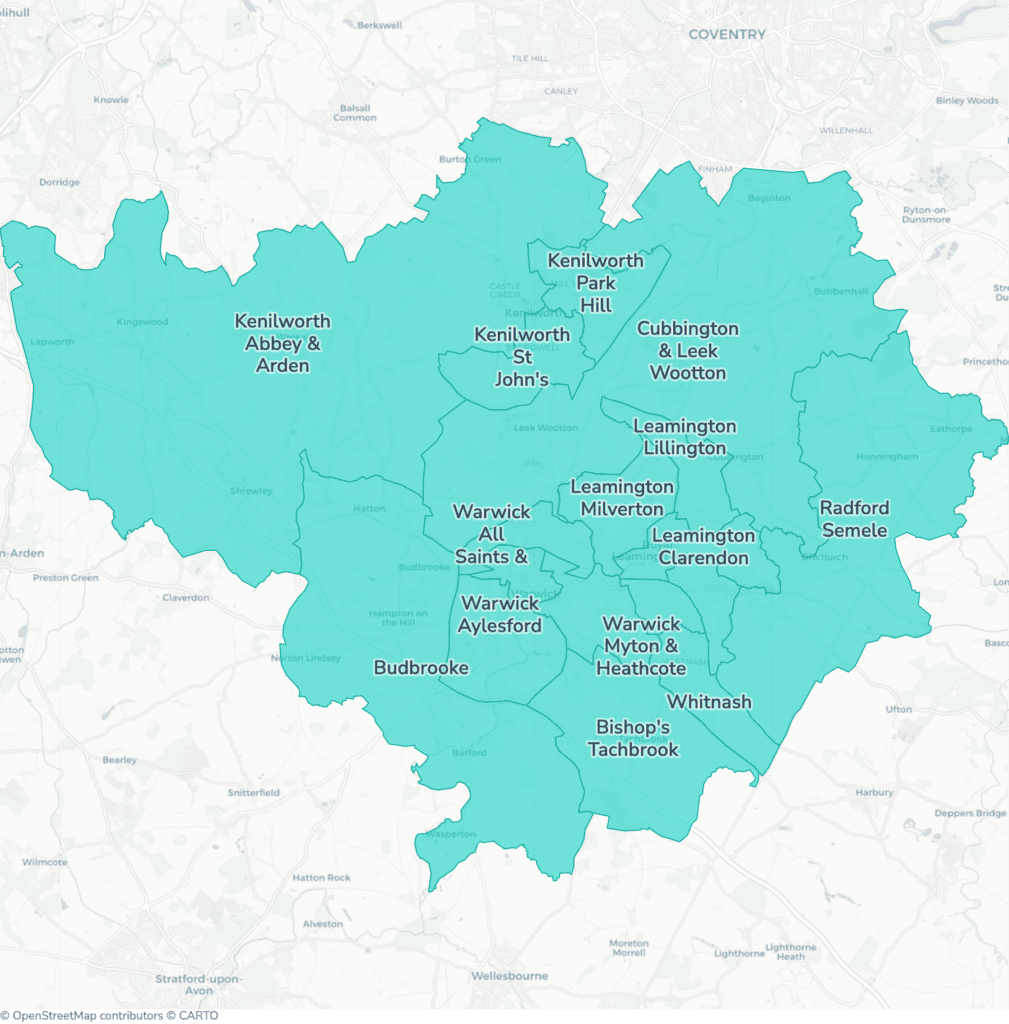
Additional licensing: 18 January 2024 to 17 January 2029, covering Bishop’s Tachbrook, Budbrooke, Cubbington & Leek Wootton, Kenilworth Abbey & Arden, Kenilworth Park Hill, Kenilworth St John’s, Leamington Brunswick, Leamington Clarendon, Leamington Lillington, Leamington Milverton, Leamington Willes, Radford Semele, Warwick All Saints & Woodloes, Warwick Aylesford, Warwick Myton & Heathcote, Warwick Saltisford and Whitnash.
Mandatory HMO licensing: in force since 2006 for HMOs of five or more people forming more than one household.

How do I apply for a licence?
You can apply for a licence via Warwick Council’s website here. Or let Kamma’s expert team process the application for you.
How much does a licence cost?
Warwick District Council operates an HMO fee schedule banded by the number of occupiers, paid in two stages:
| Item | Fee |
|---|---|
| HMO (3–5 occupiers) | £1,092 total (Stage 1 £819 + Stage 2 £273). |
| HMO (6–12 occupiers) | £1,264 (£948 + £316). Larger HMOs cost more; renewals are cheaper. |
Fees are set by the council and can change. Check Warwick District Council’s HMO licensing page for the full schedule.
We Handle Your Warwick Applications End-to-End




TRUSTED BY LEADING AGENTS & LANDLORDS ACROSS THE UK





Managing Across Multiple Boroughs?
Reduce risk by swapping manual tracking for our licensing compliance platform Kamma Suite.
1 licensing scheme. Know exactly what you need.
Warwick Property Licensing FAQs
What licensing schemes does Warwick operate?
Warwick operates additional licensing (18 January 2024 to 17 January 2029), alongside the national mandatory HMO scheme. See the scheme details above.
Do all properties in Warwick need a licence?
No. Warwick has no selective licensing, so only HMOs need a licence. Mandatory licensing covers HMOs of five or more people in two or more households. Warwick’s additional scheme, in force since 18 January 2024, covers HMOs of three or four people across the whole district.
What if my property doesn't have a licence?
Operating a Warwick HMO that requires a licence without one can bring civil penalties of up to £40,000 per property. The landlord also risks a rent repayment order of up to 24 months’ rent. A letting agent who manages the property or collects the rent commits the offence too and can be fined separately.
Can letting agents apply on behalf of landlords?
Yes. Letting agents can apply for HMO licences on behalf of landlords in Warwick District, and many manage the full process. Warwick District Council takes licence fee payments online only.
How do I apply for a Warwick property licence?
You can apply through Warwick Council’s website (licensing pages), or use a managed service such as Kamma.
Does Warwick have selective licensing?
No. Warwick District Council does not operate a selective licensing scheme. Its HMO licensing is the mandatory scheme plus the district-wide additional scheme in force since 18 January 2024.
Why did Warwick introduce additional licensing?
Warwick District Council designated its additional scheme under section 56 of the Housing Act 2004. It followed a public consultation in 2023 and Cabinet approval on 9 August 2023. The scheme began on 18 January 2024 and covers 3 and 4 person HMOs and purpose-built flats with three or more occupants.
What are the conditions to obtain an HMO licence in Warwick?
The council’s HMO licence conditions set standards for fire safety, amenities, room sizes and management (licence conditions).
About Warwick
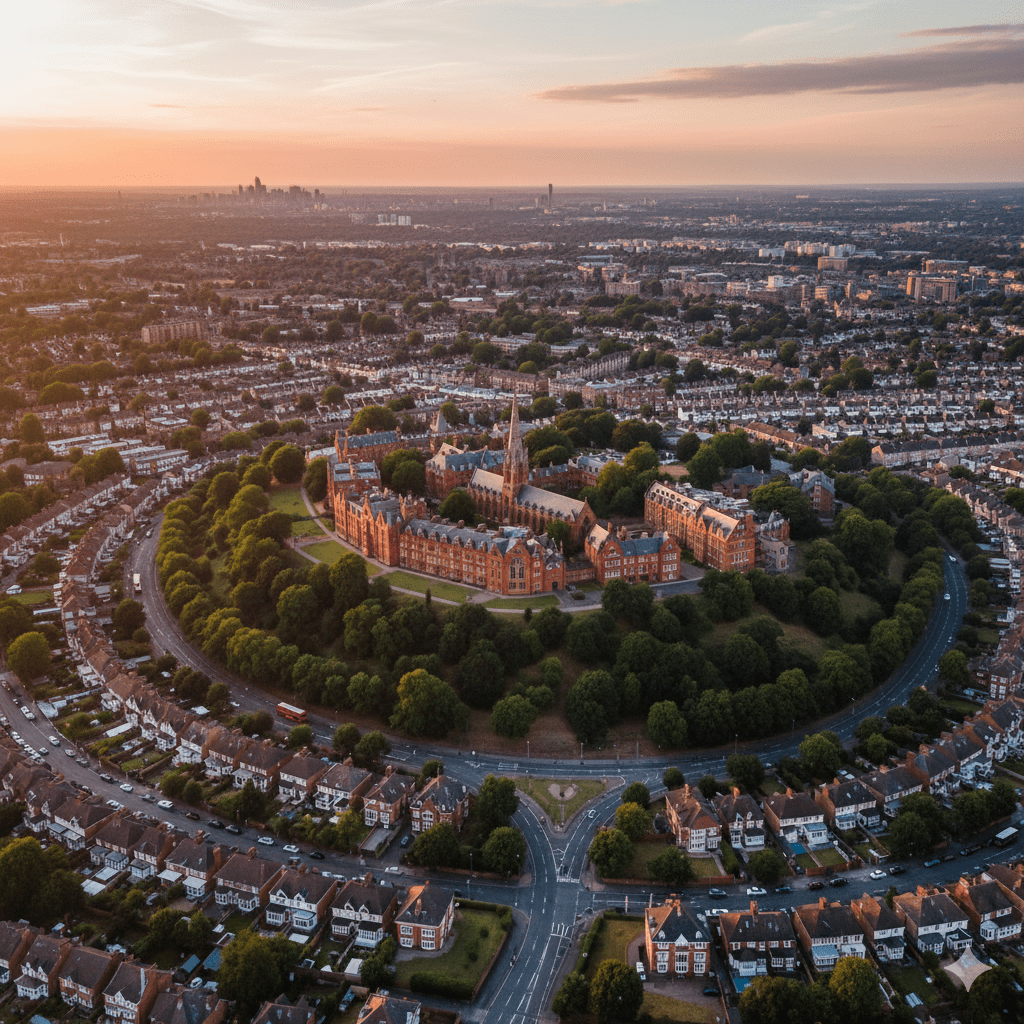
Warwick is a district in central Warwickshire, England, located on the southern edge of the West Midlands, just south of Coventry. The district includes the towns of Warwick, Kenilworth, and Royal Leamington Spa, the latter serving as the administrative centre. Warwick and Kenilworth both originated around castles, while Leamington Spa remains a popular spa town. The area covers 109 square miles. Notable sites include Warwick Castle, Kenilworth Castle, and various historic buildings. The additional licensing scheme covers the whole district, so HMOs in Leamington Spa, Warwick and Kenilworth are all in scope.
Licensing Enforcement in Warwick
Warwick District Council states that failing to license an HMO is an offence, and that civil penalties have been available as an alternative to prosecution since April 2017. Letting a property without the required licence risks prosecution and civil penalties of up to £40,000 per property. The landlord can also face a rent repayment order of up to 24 months’ rent. Where a letting agent manages the property or collects the rent, the agent commits the offence too and can be fined in its own right.
