
Harrow Council Is Moving To Data-Led Enforcement
Property Licensing Guide for Harrow
Harrow currently operates selective licensing; mandatory HMO licensing applies everywhere. A new selective licensing designation (2 wards) launches on 1 September 2026. Last checked: 25 September 2026.
This free guide will provide you with the key details regarding what licensing requirements are necessary in this area and how to apply for a licence.
New to this? Read our overview: What is selective licensing?
Harrow is in the London registration window for the PRS database, which opens on 15 July 2027: see how the London registration window affects letting agents.
Harrow Property Licensing Schemes
Got questions about licensing schemes in Harrow? We’re here to help. This free guide will provide you with the key details regarding what licensing requirements are necessary in Harrow and how to apply for a licence.
Is manual compliance causing a headache for your agency? At Kamma, we specialise in automating licensing compliance for agents across the UK. If you need any assistance in getting your property portfolio compliant, find out how we can help letting agents here.

Not sure whether a Harrow property needs a licence? Kamma's free checker covers selective, additional and HMO schemes.
Check a Harrow property →What are the licensing requirements for Harrow?
Mandatory licensing in Harrow
Mandatory HMO licensing applies across Harrow (and all of England) to larger HMOs. These are properties occupied by five or more people forming more than one household, including:
- Shared houses and flats occupied by students and young professionals.
- Properties converted into bedsits with some shared facilities.
- Properties converted into a mix of self-contained and non-self-contained accommodation.
Do I need an additional property licence in Harrow?
Additional licensing requires smaller HMOs in a designated area to be licensed. That means a privately rented property with three or more people forming more than one household.
Harrow does not currently operate an additional HMO licensing scheme. The previous designation ended on 5 August 2026 and has not been replaced.
Harrow ran a consultation on additional licensing, which closed on 27 February 2026. No designation has followed, so no additional licence requirement applies at this stage.
Do I need a selective licence in Harrow?
Selective licensing requires almost all privately rented properties in a designated area to be licensed, regardless of the number of occupants.
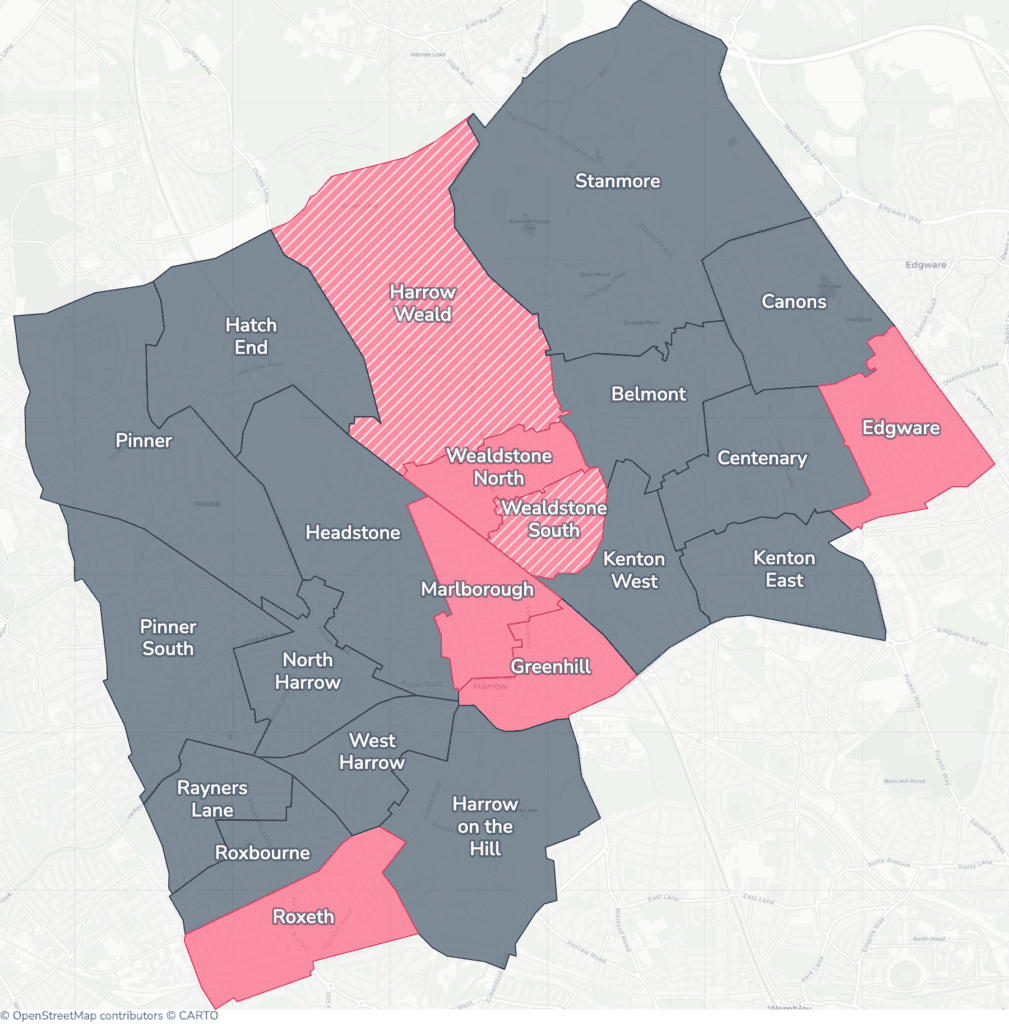
Harrow operates selective licensing. The current designation is set out below.
Selective licensing: 2 May 2026 to 1 May 2031, covering Edgware.
Selective licensing: 2 May 2026 to 1 May 2031, covering Roxeth.
Selective licensing: 6 July 2026 to 5 July 2031, covering Marlborough.
Selective licensing: 6 July 2026 to 5 July 2031, covering Greenhill.
Selective licensing: 1 September 2026 to 31 August 2031, covering Wealdstone North.
Selective licensing: 1 September 2026 to 31 August 2031, covering Wealdstone South.
Mandatory HMO licensing: in force since 2006 for HMOs of five or more people forming more than one household.

How do I apply for a licence?
You can apply for a licence via Harrow Councils website here. Or let Kamma’s expert team process the application for you.
How much does a licence cost?
Selective licence fees:
| Item | Fee |
|---|---|
| New application | £786 |
| Renewal | £786 |
| Item | Fee |
|---|---|
| New application | £1,900 |
| Renewal | £1,343.80 |
| Item | Fee |
|---|---|
| New application | £393 |
| Renewal | £278 |
| Renewal with material change | £393 |
These fees are subject to change and are accurate as of 1 May 2026.
We Handle Your Harrow Applications End-to-End




TRUSTED BY LEADING AGENTS & LANDLORDS ACROSS THE UK




Managing Across Multiple Boroughs?
Reduce risk by swapping manual tracking for our licensing compliance platform Kamma Suite.
Mandatory licensing in Harrow
Mandatory HMO licensing applies across Harrow (and all of England) to larger HMOs. These are properties occupied by five or more people forming more than one household, including:
- Shared houses and flats occupied by students and young professionals.
- Properties converted into bedsits with some shared facilities.
- Properties converted into a mix of self-contained and non-self-contained accommodation.
Do I need an additional property licence in Harrow?
Additional licensing requires smaller HMOs in a designated area to be licensed. That means a privately rented property with three or more people forming more than one household.
Harrow does not currently operate an additional HMO licensing scheme. The previous designation ended on 5 August 2026 and has not been replaced.
Do I need a selective licence in Harrow?
Selective licensing requires almost all privately rented properties in a designated area to be licensed, regardless of the number of occupants.
Harrow operates selective licensing. The current designation is set out below.
Harrow ran a consultation on additional licensing, which closed on 27 February 2026. No designation has followed, so no additional licence requirement applies at this stage.
Harrow Property Licensing FAQs
Is Harrow council planning on introducing any new licensing schemes?
Yes. Harrow Council is introducing six new selective licensing schemes in 2026, covering Edgware & Roxeth (2 May 2026), Greenhill & Marlborough (6 July 2026), and Wealdstone North & South (1 September 2026).
Do all properties in Harrow need a licence?
What if my property doesn’t have a licence?
If a property that requires a licence is not licensed in Harrow, the consequences can be significant:
- Civil penalties of up to £40,000 per property
- Rent Repayment Orders (RROs) of up to 24 months’ rent
- Enforcement action by Harrow Council
Letting agents can also be fined in their own right if they are managing the property.
Councils increasingly use data matching (e.g. council tax and tenancy data) to identify unlicensed properties, making enforcement more likely.
Can letting agents apply on behalf of landlords?
Yes, letting agents can apply for property licences on behalf of landlords in Harrow.
Many agents manage the full application process, including:
- Preparing and submitting applications
- Gathering required documents
- Liaising with the council
Agents often charge landlords an administration fee, which can turn licensing into an additional revenue stream.
How do I apply for a Harrow property licence?
You can apply for a Harrow property licence directly through Harrow Council’s website, or use a managed service to handle the process for you.
The application typically involves:
- Completing the online council application
- Providing property and tenancy details
- Uploading supporting documents (e.g. gas safety certificates, EPC)
- Paying the relevant licence fee
Many letting agents choose to use a managed licence application service, such as Kamma, to:
- Ensure applications are completed correctly
- Reduce internal admin
- Handle council queries and follow-ups
👉 This can save time and help avoid delays or rejected applications.
How long does a Harrow property licence application take?
The time it takes to obtain a Harrow property licence can vary depending on the council and the quality of the application.
In general:
- Processing times can range from a few weeks to several months
- Delays are common if applications are incomplete or submitted incorrectly
- High volumes of applications during new scheme launches can increase wait times
Submitting a complete and accurate application is the best way to avoid delays.
Why did Harrow Council introduce selective licensing?
Harrow Council introduced selective licensing in response to significant issues related to anti-social behaviour, crime, and poor housing conditions, particularly in areas like Wealdstone. The council identified numerous complaints about overcrowded properties, subletting, overflowing bins, noise, and property damage, which were commonly associated with rented properties. Selective licensing was seen as a tool to hold landlords accountable for the management of their properties and ensure that they take responsibility for tenant behaviour and property standards. The scheme aimed to improve living conditions, reduce environmental problems, and promote safer communities.
Why did Harrow Council introduce additional licensing?
Harrow Council introduced additional licensing for Houses in Multiple Occupation (HMOs) to address ongoing issues such as overcrowding, disrepair, anti-social behaviour, and fire safety risks, as well as the significant management deficiencies found in 95% of licensed HMOs. With a growing population and an increasing reliance on private rentals (30% of housing stock by 2017), the council aimed to regulate smaller HMOs not covered by mandatory licensing. The scheme also sought to protect vulnerable tenants living in high-risk properties and ensure landlords maintain essential safety and living standards.
What are the conditions to obtain a HMO licence in Harrow?
Harrow’s HMO regulations, as outlined in their licensing standards, aim to ensure safe and well-maintained accommodations for tenants. The regulations require that all Houses in Multiple Occupation (HMOs) meet minimum space and amenity standards, including proper room sizes and shared facilities like kitchens and bathrooms. Safety measures are a priority, with strict guidelines on fire safety, such as the installation of smoke alarms, fire doors, and escape routes. Landlords must also ensure electrical and gas safety, provide secure access, manage waste effectively, and address any pest issues promptly. Additionally, landlords are responsible for managing tenant behaviour, addressing anti-social behaviour, and keeping the property in good repair. Non-compliance with these standards can lead to fines, penalties, or the revocation of the HMO licence.
About Harrow
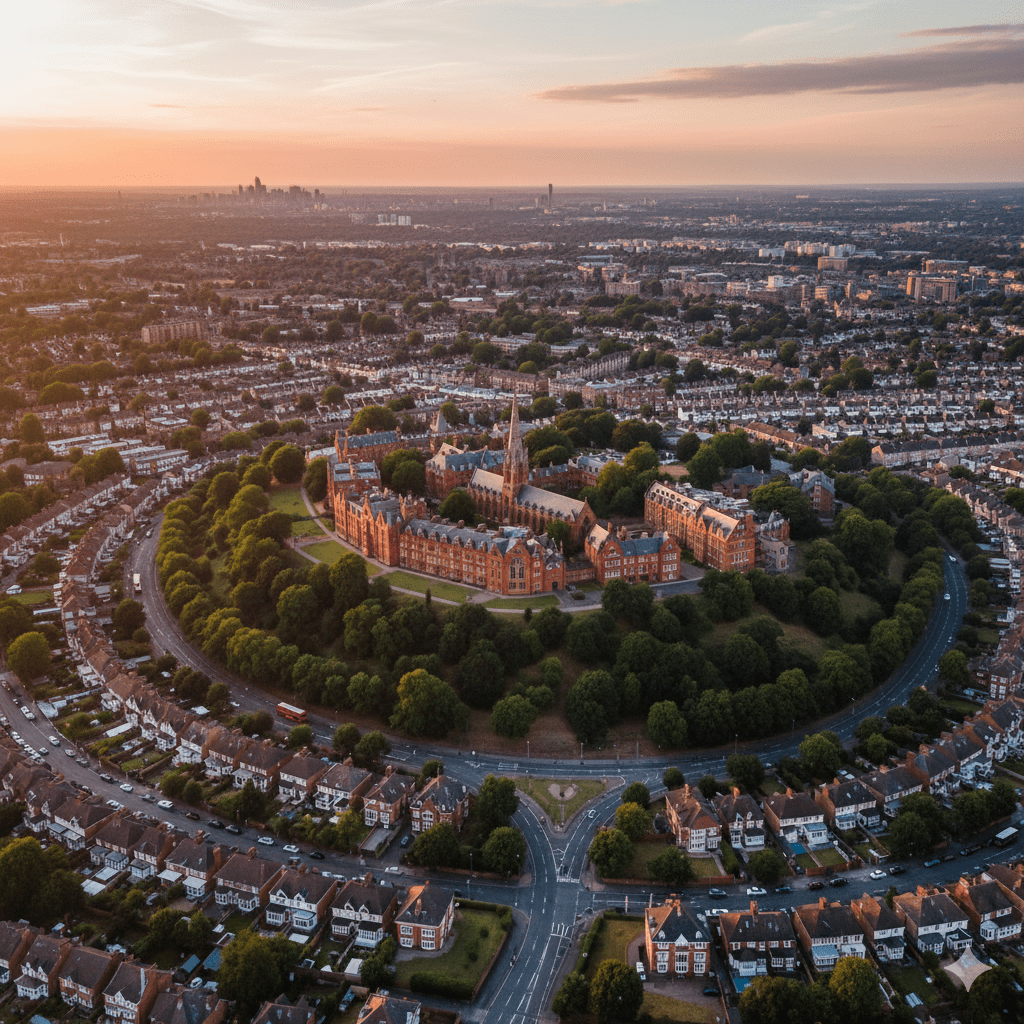
Harrow is an outer borough of London, situated on the northwestern edge of the city. Historically part of Middlesex, it became a London borough in 1965. Harrow features a mix of suburban areas, including Pinner, Stanmore, and Wealdstone, and is home to landmarks such as the mediaeval Church of St. Mary and the prestigious Harrow School. The borough has a rich history, with Saxon earthworks like Grim’s Dyke and Bentley Priory, which played a key role in World War II. Today, Harrow serves as a major shopping and residential area, covering 19 square miles (50 square km) with a population of 239,056 as of 2011.
Licensing Enforcement in Harrow
Harrow Council has demonstrated strict enforcement of licensing regulations by issuing significant penalties to landlords who violate housing laws. In a notable case, a rogue landlord was fined £485,000 for illegally converting and renting out large sheds as flats, which lacked the appropriate licences and failed to meet basic housing standards. The properties were overcrowded and unsafe, violating fire safety regulations and other health and safety standards. This case highlights the council’s commitment to ensuring landlords provide safe, legal accommodations, with substantial fines like this serving as a strong deterrent for future violations.
Neighbouring borough guides
Licensing schemes stop at the borough boundary. A property one street over can need a different licence. Guides for the neighbouring boroughs:
Applying for a property licence in Harrow
A Harrow licence application is made to the council on the council’s own form, with the documents that council asks for. Requirements differ between councils and change when a designation changes, which is most of why an application that was correct last year is not necessarily correct now.
Letting agents can have Kamma do it. We prepare and submit mandatory HMO, additional HMO and selective licence applications in Harrow and in every other UK council area, collect the supporting documents from you or from your landlord, and monitor the application through to approval. The licensing application service page sets out what we need and what happens when a council rejects a submission.
Landlords should speak to their letting agent, who can instruct us directly.
