
Property Licensing Now Demands More

2025 marked the sharpest rise in property licensing schemes since Kamma began tracking licensing in 2017, with 49 schemes announced.
With multiple schemes now approaching renewal at the end of their five-year cycles, and councils set to gain stronger enforcement powers once the Renters’ Rights Bill becomes law, this trajectory is only expected to accelerate.
Licensing compliance is no longer a static, localised requirement. It is becoming a dynamic, fast-moving regulatory landscape that letting agents are expected to navigate in real time.
London is at the epicentre of this shift.
The expansion of licensing schemes from 2017–2025

28/32
Boroughs with selective or additional licensing
52
Active London based schemes and consultations
£13.8m
In fines levied for licensing offences
The scale alone is challenging. The fragmentation is what turns complexity into risk.
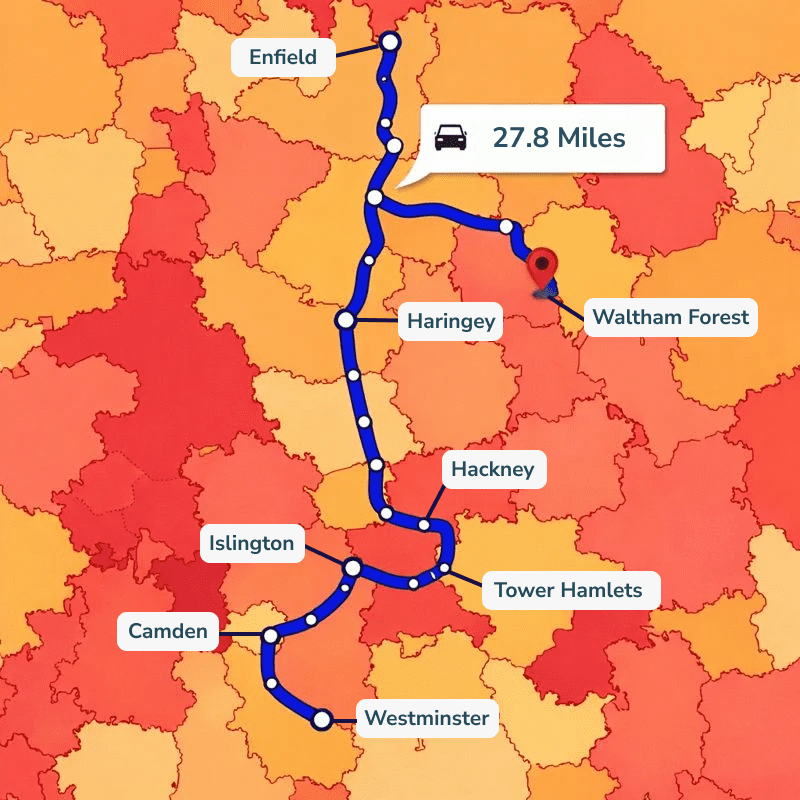
"In just over 25 miles driving around North London, you can pass through 16 different types of licensing legislation."
Why compliance is more important than ever
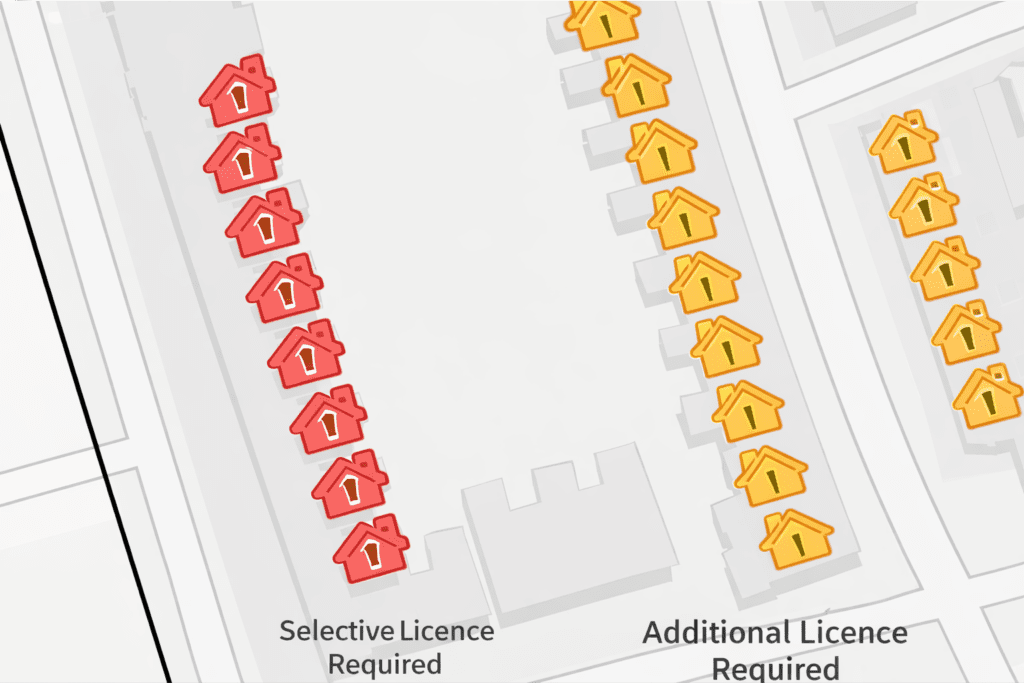
Every council operates its schemes differently, not just in whether a licence is required, but how that licence is granted and maintained.
Buried within scheme documentation are variations relating to:
At the same time, the consequences of getting this wrong are becoming more severe.
Upcoming changes include:
Renters’ Rights Bill becomes law in May 2025
Increased use of private enforcement officers
A national landlord database due to launch
Rent Repayment Orders doubling to 24 months
Civil penalties and fines of up to £40,000
Complete removal of Section 21 evictions
The margin for error is shrinking.
Where licensing compliance breaks down
For even small letting agents operating across just three boroughs, compliance can mean understanding and tracking six or more overlapping licensing schemes at any one time.
Licensing compliance now operates as a system with multiple moving parts: tenancies, scheme boundaries, licence conditions, application requirements, and people. When those parts change independently, and processes don’t keep pace, licences don’t usually fail in obvious ways.
How licences slip through the cracks
A line has been crossed
Licensing compliance has quietly shifted from an administrative task to specialist discipline, without agents being given the tools, systems, or capacity to match that shift.
Continuous monitoring
Real-time awareness of scheme changes
Geographic Precision
Street-level accuracy across boundaries
Regulatory interpretation
Understanding council-specific requirements
Operational Resilience
Systems that don’t rely on memory
This is the reality agents are being asked to operate within.
Meet Kamma
Corporate-level licensing compliance, now accessible at a fraction of the cost.
Kamma provides a fully managed licensing compliance solution, integrated directly into your CRM and existing workflows.
Our platform delivers:
Book a quick, no-commitment consultation to discuss your licensing requirements, tailored specifically to the boroughs you operate in.
Using by leading agents and surveyors


